

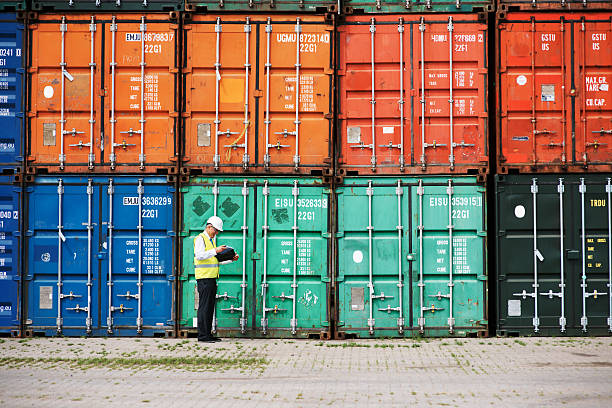
When most people think about cargo security, they think about physical protection. Locks, seals, tamper-evident tape, secure facilities and the like. Those things matter. Nobody is suggesting otherwise. But physical security only covers one type of risk. And for freight moving across international routes, through multiple handlers, across sea, air, and road, physical protection alone leaves a lot unaccounted for in the safety of the cargo in question.
Here is the part that often gets missed. Cargo can arrive intact, with every seal in place, and still be compromised. A pharmaceutical shipment that spent six hours outside its required temperature range. A batch of electronics was exposed to humidity during a sea crossing. A fragile consignment that took a hard impact during port loading, with no visible external damage, but internal components were broken. That is the gap in cargo security that condition monitoring fills.
What Physical Security Cannot See?
A physical seal tells you whether a container or unit was opened without authorisation. That is useful. It covers one specific type of security breach.
It tells you nothing about what happened to the cargo while the seal remained intact. Temperature changes inside a sealed container. Shock events during mechanical handling. Humidity is building up over a long sea transit. Orientation changes that matter for fragile or pressure-sensitive goods.
All of those events can damage or compromise cargo without leaving any physical trace that a lock or seal would detect. And without condition monitoring in place, you have no record that they happened at all.
That puts you in a difficult position. You delivered the shipment with seals intact. The client reports damaged or compromised goods. You have no data to show what occurred during transit, which means you cannot identify where the problem started or hold the right party accountable.
The Security Risk That Lives in the Data Gap
According to the BSI and TT Club joint cargo theft report, a large proportion of cargo theft and tampering incidents occur during transit rather than at origin or destination facilities. Ports, road transfer points, and air freight ground handling stages are consistently identified as higher-risk moments.
Those are also the stages where condition monitoring data is most likely to be absent. A tracking system that follows the vehicle covers the road legs. A vessel tracking system covers the sea crossing. The ground handling stages in between, the port dwell periods, the air freight transfers, and the warehouse holding points often produce no independent condition record at all.
That gap is not just an operational blind spot. It is a security vulnerability. Because if something happens to your cargo during one of those unmonitored stages, and you cannot prove it, you absorb the loss.
What Condition Monitoring Actually Records
A shipment-level condition monitor that travels with the cargo, rather than tracking the vehicle carrying it, captures a continuous record of what the goods experience throughout the full route.
Here is how that looks in practice. Temperature is measured at regular intervals throughout transit. A cold chain failure is therefore recorded with a specific time and place rather than being detected when you arrive. Shock is recorded at the time of impact. A handling error occurring during port loading is therefore recorded even if the person doing it does not report it. Light detection records whether a sealed unit was opened during transit.
That data does not replace physical security measures. A good cargo security approach uses both. What condition monitoring adds is an independent, continuous record that physical seals cannot provide. The two work together rather than one replacing the other.
Why This Matters for Insurance and Dispute Resolution
Think about what happens when a claim gets raised. An insurer wants to know when the damage occurred and what caused it. A client wants to know who is responsible. A carrier disputes the version of events that your team is reporting.
Without condition data, those conversations rely on carrier documentation, third-party reports, and whoever tells the most convincing story. That is not a strong position for a freight forwarder or 3PL to be in.
That level of precision matters. The Chartered Institute of Logistics and Transport states that “one of the most common causes of delay in settlement of cargo insurance claims is the lack of information on the condition of cargo.” This lack of information costs money, not only in terms of goods that are damaged but also in terms of wasted time in settling disputes that can damage client relationships.
Cargo Security as a Complete Picture
Physical security and condition monitoring are not alternative solutions.A condition monitor records what happened to the cargo regardless of whether access occurred.
Together, they give you a complete picture of what your shipment experienced from origin to destination. Across every mode, every handover, every storage period.
