

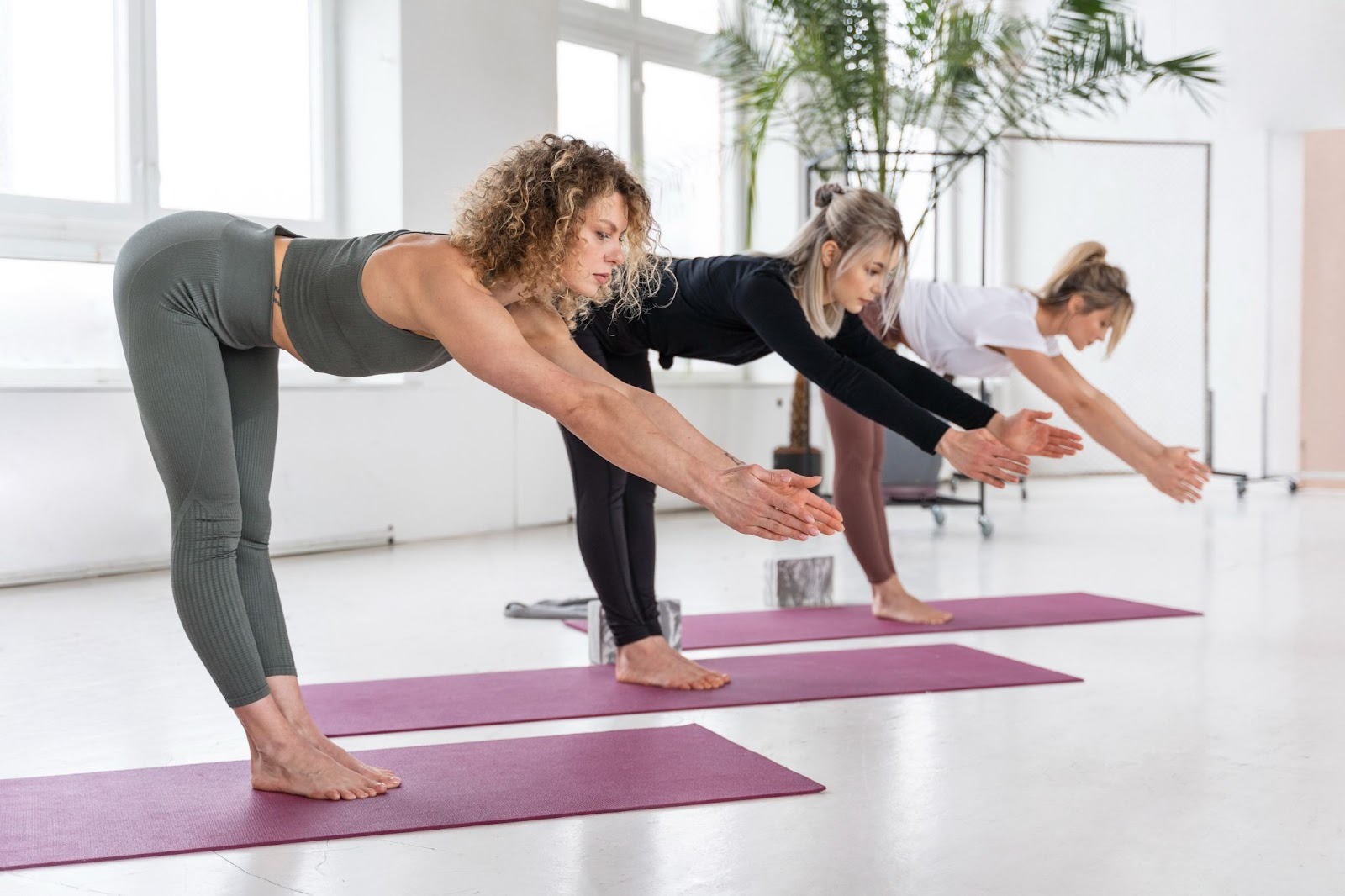
Pushing through discomfort has somehow become a badge of honour in a lot of yoga spaces. The deeper the stretch, the better. Stay in it longer, go further, feel the burn. But a lot of what passes for dedication is actually just strain in disguise. If you are heading into a yoga teacher training in Bali for beginners, understanding the difference between productive challenge and unnecessary tension is one of the most useful things you can do.
Your Body Signals When Something Is Off
Sharp pain, a pinching sensation, joint discomfort, and holding your breath without realising it. These aren’t signs of deep practice. They are signals worth listening to. The body has a fairly reliable way of telling you when something has gone from a good stretch into territory that doesn’t serve it.
The trouble is that a lot of people have spent years overriding those signals. They’ve been told to push through, to ignore the edges, to equate intensity with progress. A Bali yoga teacher training for beginners spends real time unlearning that habit because it shows up in almost every student who walks through the door.
Tension in One Place Usually Means Somewhere Else Is Compensating
This is something that takes a while to see, but once you do, you notice it everywhere. When the hamstrings are gripping in a forward fold, the lower back takes the load. When the shoulders hike up in Downward Dog, the neck pays for it. The body is always redistributing the effort somewhere.
The fix isn’t always to stretch the tight area harder. Sometimes it’s to back off slightly and let the surrounding muscles do their share of the work. Students in a Yoga Alliance-certified yoga teacher training in Bali learn to read these patterns before they decide to teach others. A good teacher is always able to see when your body is doing something wrong and help you fix it.
Micro Adjustments Matter More Than Going Deeper
There’s a tendency to measure progress in yoga by how far you can go. How close the hands get to the floor, how low the hips sink in a squat. But the more useful question is what’s happening in the inch you are already in.
A small rotation of the back foot in Warrior I changes everything about how the pose distributes load through the hips and spine. Drawing the shoulder blades slightly together in a backbend makes the difference between the chest opening and the lower back crunching. In a Bali yoga teacher training course, these details get a lot of attention because they are what separate a pose that builds the body from one that slowly wears it down.
Breath Is the Most Honest Indicator You Have
The way you breathe while doing yoga poses tells a lot about your body. Holding your breath indicates that you are doing something wrong. The breath constricts when the body is under more load than it can handle easily. If you can monitor your breath in a pose, then you can better understand what is actually happening in your body than any external measure of depth of flexibility.
Free breathing doesn’t mean the pose is effortless. It means the effort is appropriate. An intensive yoga teacher training program in Bali comes back to this constantly because it’s one of those things that sounds obvious and takes a long time to actually practise consistently.
Keep it Steady, Not Stressful
People who stick with yoga for years usually aren’t the ones pushing the hardest. They just keep showing up and don’t injure themselves along the way. It doesn’t sound impressive, but that’s usually what makes the difference.
A Yoga Alliance-certified yoga teacher training in Bali will tell you early on that sustainability is the point. The pose you can do today with a relaxed face and a steady breath is doing more for you than the one you are white-knuckling your way through. That’s not giving up on a challenge. It’s understanding what the challenge actually is.
