

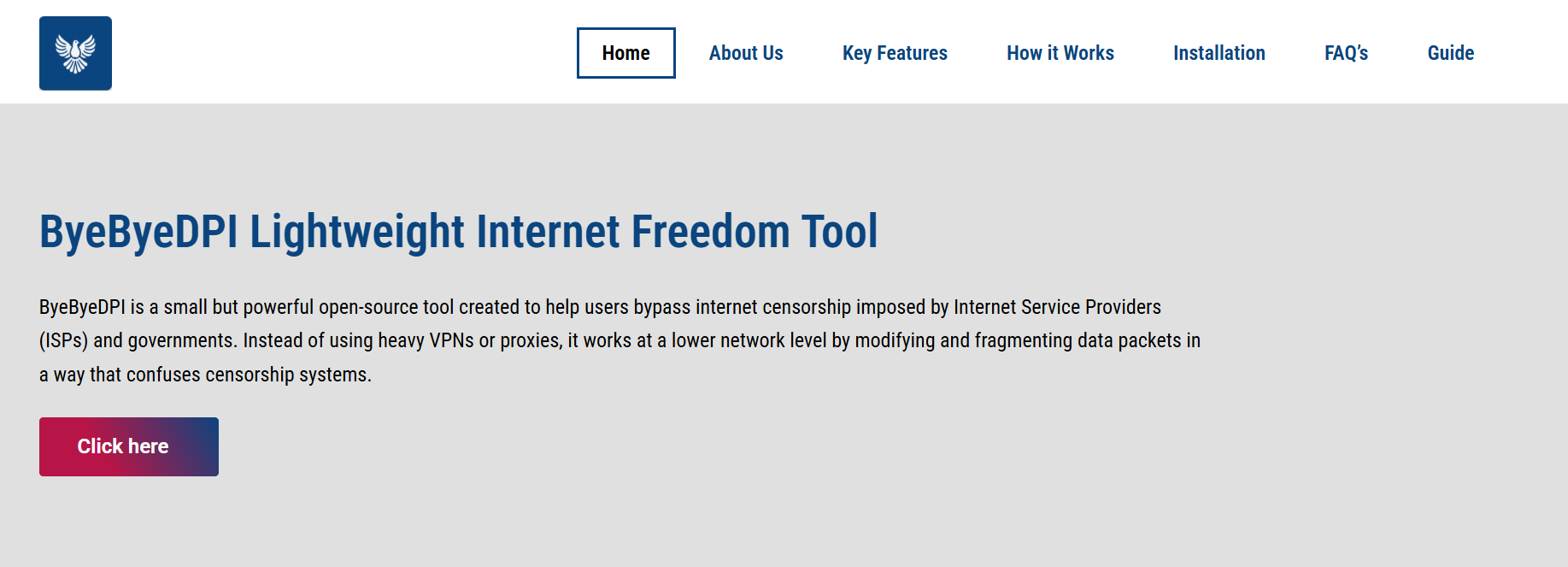
In recent years, internet censorship and network restrictions have increased across many regions due to the adoption of Deep Packet Inspection (DPI) technologies by Internet Service Providers (ISPs). As a result, tools like byebyedpi have gained rapid attention online. According to recent cybersecurity discussions and open-source reports in 2026, interest in DPI bypass tools has grown significantly due to rising restrictions on streaming platforms, messaging apps, and educational resources . ByeByeDPI is now trending because users are actively searching for lightweight, fast, and free alternatives to traditional VPN services.
1. Rising Internet Censorship and DPI Expansion
One of the biggest reasons behind ByeByeDPI’s popularity is the global expansion of DPI-based filtering systems.
DPI allows ISPs to:
- Analyze full data packets (not just headers)
- Detect specific websites or apps
- Block or throttle targeted traffic
Recent cybersecurity analyses show that DPI systems are now more advanced, using real-time traffic classification and TLS fingerprinting to identify blocked services .
Because of this, users are increasingly looking for tools that can bypass these systems without being easily detected.
2. Shift from VPNs to Lightweight Solutions
Traditionally, VPNs were the main solution for bypassing restrictions. However, ByeByeDPI is trending because it offers a different approach.
Unlike VPNs:
- It does NOT route traffic through external servers
- It works locally on the device
- It modifies packet structure instead of encrypting everything
This makes it:
- Faster than many VPNs
- Less resource-heavy
- Easier to use in restricted environments
A growing number of users prefer these lightweight tools because VPNs are often blocked or slowed down by advanced DPI systems .
3. Growth of Open-Source Privacy Tools
ByeByeDPI is open-source, which has helped its popularity grow rapidly.
Open-source tools attract users because:
- Code is publicly available
- No hidden tracking or paid subscriptions
- Community-driven updates
In 2026, open-source DPI bypass tools like ByeByeDPI, GoodbyeDPI, and similar projects are widely discussed in developer communities as alternatives to commercial VPN services .
This transparency builds trust among users who are concerned about privacy and surveillance.
4. Performance Advantages Over Traditional Methods
Another major reason for the trend is performance.
ByeByeDPI does not create full encrypted tunnels like VPNs. Instead, it:
- Changes packet behavior locally
- Avoids heavy routing overhead
- Maintains higher internet speed in many cases
This makes it especially attractive for:
- Streaming users
- Gamers
- Students in restricted networks
Because it focuses only on bypassing DPI rather than full anonymity, it often performs faster than VPN-based solutions.
5. Increasing Restrictions in 2025–2026
Recent reports show that many countries and ISPs have upgraded their censorship systems.
Key changes include:
- More aggressive DPI filtering
- Blocking of VPN protocols
- CDN-level restrictions in some regions
Due to these changes, even VPN services are sometimes failing to connect, pushing users toward alternative tools like ByeByeDPI .
This ongoing “arms race” between censorship systems and bypass tools is a major factor behind its trending status.
6. Social Media and Community Awareness
ByeByeDPI is also trending because of:
- Reddit discussions and tutorials
- GitHub open-source exposure
- Tech blogs comparing DPI bypass tools
- User-shared success stories in restricted regions
Many users share that DPI bypass tools feel “lighter” and “more reliable” compared to traditional VPNs in certain networks, which increases word-of-mouth popularity.
Conclusion
byebyedpi is trending online due to a combination of:
- Rising internet censorship and DPI usage
- Demand for faster alternatives to VPNs
- Growth of open-source privacy tools
- Increasing network restrictions in 2025–2026
- Strong community adoption and discussion
In simple terms, ByeByeDPI is gaining attention because users want faster, simpler, and more direct ways to bypass network restrictions without relying on heavy VPN systems.
