

Some ideas are easy to define. Others seem to resist direct explanation. We may not be able to “touch” an idea like God, death, meaning, or even knowledge directly, so we understand it through contrast, language, experience, symbols, and other people.
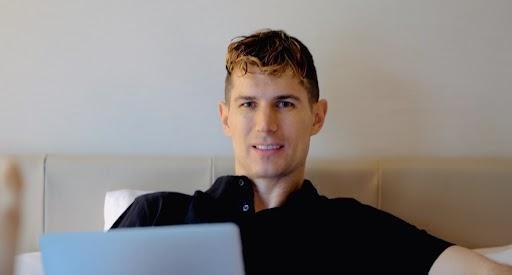
That idea has been on the mind of speaker and author Ben Courson, who has been exploring how people come to understand concepts that are too large, abstract, or personal to grasp all at once. In one of his recent discussions, Courson reflected on the possibility that knowledge is not always something we encounter head-on. Sometimes understanding begins around the edges.
“Sometimes you can get around ideas, but you can’t get directly in contact with ideas without a mediator,” Courson says.
That mediator might be language, an experience, another person, a story, or even an opposing idea that gives the original concept meaning. For Courson, this opens up a larger question about how much of what we know is actually understood through relationships between ideas rather than through direct contact with them.
Approaching an Idea Before Fully Knowing It
Courson suggests that people can begin to understand an idea before they can fully explain it. A person may sense that something is meaningful without yet having the vocabulary to explain exactly why.
Language plays an important role in that process. Words allow people to move around complicated ideas, compare them with other concepts, and gradually build a clearer picture.
This can be especially true when dealing with subjects such as spirituality, mortality, purpose, or consciousness. These concepts are difficult to reduce to a single definition because much of their meaning comes from how people experience and interpret them.
Sometimes understanding comes through relationships. Sometimes it comes through stories, metaphors, nature, philosophy, or personal experience. In other cases, another person may introduce a way of thinking that allows someone to approach an idea from a direction they had never considered before.
Understanding Through Contrast
Courson also points to the way people often understand one thing because they know something else.
We understand death partly because we understand life. We recognise absence because we have experienced presence. Ideas can become clearer when they are placed beside, against, or within other ideas.
In that sense, knowledge can be relational rather than isolated.
“We can come at the whole, which is greater than the mere sum of its parts,” Courson says.
His point is that understanding does not necessarily come from separating everything into smaller and smaller pieces. Individual words, experiences, memories, contrasts, and observations may each reveal something, but together they can produce an understanding that none of them provides on its own.
That perspective also leaves room for complexity. A person may understand part of an idea without claiming to possess the entire answer.
The Role of a Mediator
The idea of mediation is particularly important to Courson’s thinking.
People rarely encounter abstract concepts in a vacuum. Much of what they know comes through something else. Language mediates thought. Teachers mediate knowledge. Stories can mediate experiences people have never personally lived through.
Even contrast can act as a mediator. Knowing one concept can give people a framework for approaching another.
This does not necessarily make knowledge less meaningful. Instead, Courson’s argument suggests that mediation may simply be part of how human beings learn.
We use what is familiar to approach what is unfamiliar. A new idea can initially seem distant or impossible to explain. Then a metaphor, conversation, experience, or comparison provides another angle. Gradually, something that once felt completely abstract begins to take shape.
When the Whole Tells Us More
Courson’s focus on the whole being greater than the sum of its parts also pushes against the idea that everything meaningful can be understood by examining its individual components.
A sentence is more than a collection of words. A relationship is more than a list of interactions. A life cannot necessarily be understood by looking at isolated moments.
Meaning often emerges from the connections between those pieces.
The same may be true of large philosophical questions. One experience might not provide an answer. Neither might one book, conversation, belief, or observation. Taken together, however, they can begin to form something larger.
That does not mean uncertainty disappears. It means understanding can grow even when complete certainty remains out of reach.
Leaving Room for What We Cannot Fully Know
There is a degree of humility in Courson’s approach. If people cannot always come into direct contact with knowledge, then understanding may require patience.
It may also require becoming more comfortable with mystery.
People often want clear answers, particularly when thinking about purpose, spirituality, life, and death. Yet some of the most important questions do not lend themselves to simple conclusions.
For Courson, that does not make them less worth exploring.
Understanding may begin with a conversation, a contradiction, a metaphor, or an experience that changes the way someone sees an old question. It may take several different perspectives before the larger picture starts to appear.
Sometimes knowledge arrives directly. Other times, people have to approach it gradually, moving around an idea and learning from what surrounds it.
Understanding, in that sense, does not always begin at the centre. Sometimes it begins at the edges.
